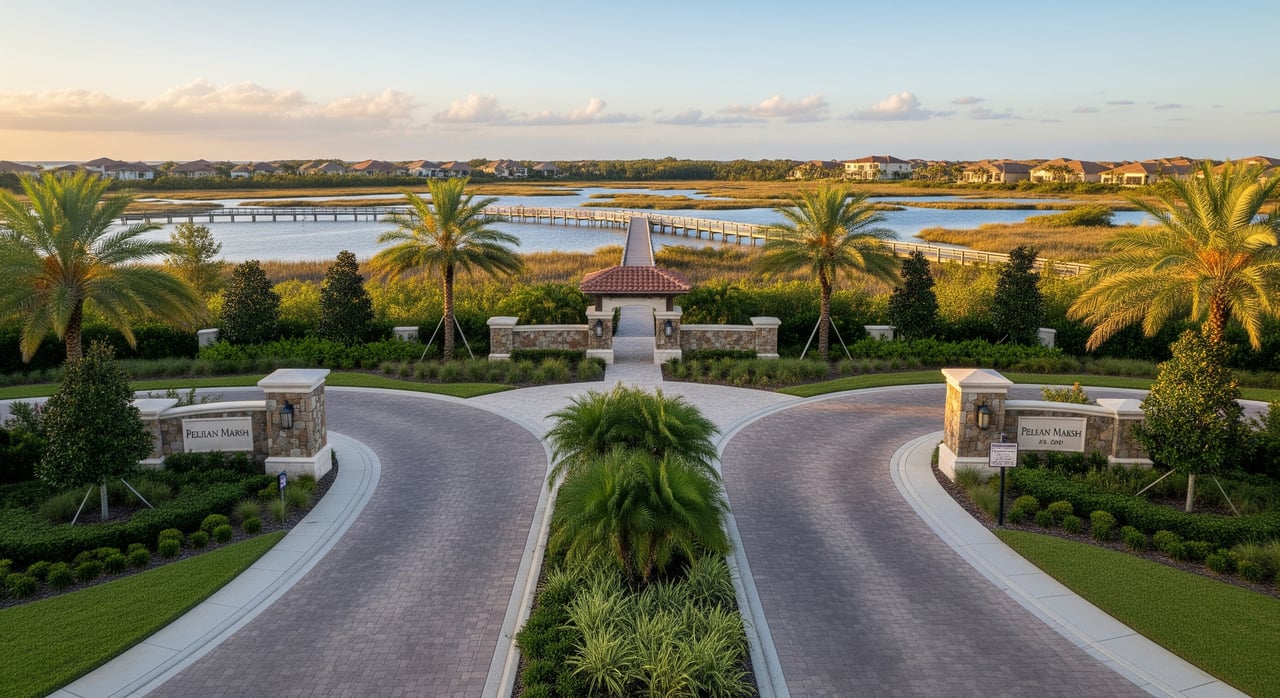
Pelican Marsh CDD vs HOA Explained: Who Pays What?
November 6, 2025
November 6, 2025
You find the perfect home in Pelican Marsh, then realize there are different fees with different names. It is normal to wonder which charge covers roads, lakes, gates, and amenities, and which one shows up on your tax bill. You deserve a simple, accurate breakdown so you can budget with confidence and avoid surprises at closing. In this guide, you will learn how Pelican Marsh’s Community Development District and the master and sub-associations typically split responsibilities and costs, plus the documents to request before you buy. Let’s dive in.
A Community Development District is a special-purpose local government under Florida Statute Chapter 190. It plans, finances, builds, operates, and maintains community infrastructure that benefits the development. The CDD funds this work through assessments, which may appear on your property tax bill as non-ad valorem assessments or be billed separately.
A homeowners’ association is a private corporation that manages community rules and amenities under recorded covenants and bylaws. A master association typically runs the community-wide amenities and common areas, while sub-associations handle neighborhood-level items such as landscaping, private roads, or building exteriors for condos. HOAs are governed by Florida Statutes Chapter 720, and condominiums follow Chapter 718.
The split between a CDD and associations is defined in recorded documents, engineer’s reports, plat maps, and any maintenance or interlocal agreements. In most planned communities, the CDD handles large-scale infrastructure and water management, while the associations manage amenities, neighborhood maintenance, and enforcement of covenants. Some functions are intentionally shared, such as a CDD owning entry features while the master HOA funds on-site security staff.
While you will confirm specifics in the official Pelican Marsh documents, CDDs in Florida commonly handle major infrastructure for the entire development. Expect the CDD to own and maintain stormwater systems such as lakes, canals, culverts, and drainage easements. The district may also maintain district-owned roads and sidewalks, street lighting in public rights of way, entry features and hardscape, and permits tied to water management. The CDD’s assessments also cover any bond debt issued to build that infrastructure, along with lake management and related operations.
The master association typically operates the primary amenity experience. This can include clubhouse facilities, pools, fitness, social programming, and staff for amenities. Master-level HOA budgets often include landscaping of HOA-owned common areas, insurance for those facilities, management contracts, and reserves for future repairs. The HOA also enforces the community’s covenants and design standards and collects dues and any special assessments for capital work.
Sub-associations focus on neighborhood-specific needs. That can include landscaping for village common areas, private roads if not owned by the district, and additional amenities that serve just that village. For condominiums and many townhomes, the sub-association often funds exterior building maintenance, roof and wall reserves, building insurance, elevators, pest control, and sometimes bundled services like cable. Fees vary by property type and scope of services.
In many Naples communities, the CDD may own and maintain physical gate structures and automation equipment, while the HOA funds gate staffing and security vendors. The split can vary by agreement. In your due diligence, confirm who budgets for guard salaries, radios, software, and access systems so you understand which entity is responsible for each piece.
A CDD typically levies two main categories of charges. Debt service assessments repay bonds that financed the initial infrastructure and can be a significant portion of the total until bonds are retired. Operation and maintenance assessments fund day-to-day costs like landscaping in district corridors, lake management, administration, insurance, and legal.
Associations charge regular dues, often monthly, quarterly, or annually, to run amenities and maintain common areas. They also build reserves for future repairs. If a major project or shortfall arises, associations can levy special assessments as permitted by their governing documents. Some documents allow limited board-approved increases, while larger increases may require member votes.
In Collier County, many CDD assessments appear on the property tax bill as non-ad valorem assessments. Some districts choose direct billing instead. At closing, outstanding CDD and HOA balances are settled using estoppel letters that state the amounts due. Bond-based CDD assessments generally run with the property, so you will want to know if any prepayment options exist and how they work.
Exact figures vary by unit type and the community’s budgets in a given year. Across Florida, CDD assessments range from a few hundred dollars per year to several thousand dollars per year in communities with larger bond debt. Master HOA dues in high-amenity Naples communities commonly range from about 1,000 to over 6,000 dollars per year. Sub-association fees vary widely based on services and property type, often from a few hundred to several thousand dollars per year, with condos typically higher due to building insurance and exterior maintenance. For Pelican Marsh, review the current CDD budget and the master and sub-association budgets to set your true annual carrying cost.
Owning in Pelican Marsh typically means you will pay both a CDD assessment and association dues, and possibly a sub-association fee depending on the neighborhood or building type. The CDD commonly funds community infrastructure and stormwater management, including any related bond debt. The master and sub-associations manage amenities, neighborhood maintenance, enforcement of covenants, and staffing like gate guards. When you review the right documents early and confirm who pays for what, you can plan your total carrying cost with confidence and head to closing without surprises.
If you would like a clear, property-specific breakdown before you write an offer, reach out. I will help you gather the right budgets, estoppels, and disclosures so you can make a confident decision in Pelican Marsh.
Ready to explore homes or confirm your ownership budget? Connect with Laurie Bellico for expert, discreet guidance tailored to Pelican Marsh and greater Naples.
Stay up to date on the latest real estate trends.
GET IN TOUCH WITH LAURIE TO LEARN MORE
Coquina Sands Luxury Group William Raveis Real Estate 225 Banyan Blvd #110 Naples FL 34102